What does breast thermography have to offer?
What is thermography?
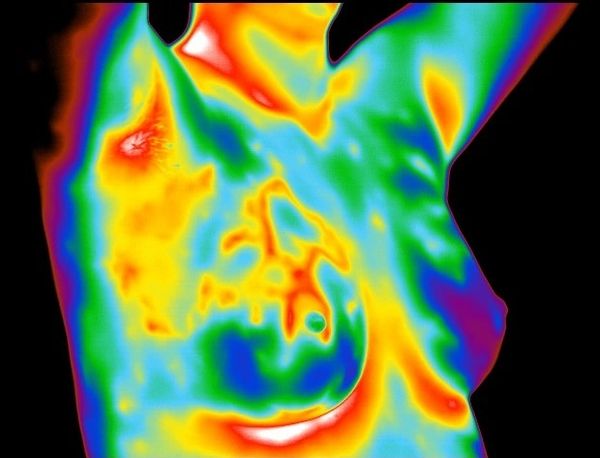
Breast thermography, or thermal imaging, is a noninvasive and painless test that doctors sometimes use to monitor for early breast changes that may warn of breast cancer. It works by detecting increases in temperature. Thermography (Medical Infrared Imaging) is a state-of-the-art risk assessment tool that is used as part of an early detection program which gives women of all ages the opportunity to increase their chances of detecting breast disease at an early stage.
Thermography does not involve radiation. Instead, it uses an ultra-sensitive camera to produce high-resolution, infrared photographs, or heat images of the breast.
Identify early signs of breast disease
Breast thermography has developed into an important adjunctive tool in the fight against breast cancer. As a safe, comfortable, and sensitive procedure, thermography is used to detect infrared risk markers that may suggest some of the earliest signs of breast cancer.
Angiogenesis, or new blood vessel formation, is necessary to sustain the growth of a tumor. Breast thermography may be the first signal that such a possibility is developing.
Individualized breast cancer risk assessment
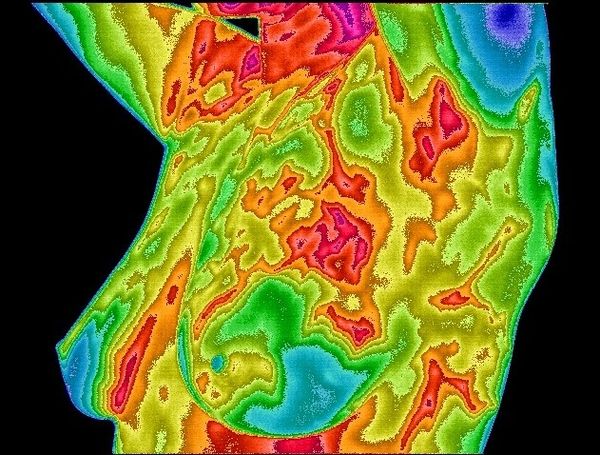
Women with a family history are definitely at greater risk, but 75% of women who get breast cancer have no family history of the disease. If discovered, certain thermographic risk markers may warn a woman that she needs to work closely with her doctor to improve her breast health. Monitoring with regular check-ups and thermography will look for improvements with time or possibly the earliest signs that a problem may exist.
Possible role in breast cancer prevention
Since the single greatest risk factor for the development of breast cancer is lifetime exposure to estrogen, normalizing the balance of the hormones in the breast may be an important step in prevention.
Certain thermographic signs may suggest the effects of hormones in the breasts. This may be the first marker that alerts your doctor to this possibility. Your doctor will first need to run further tests to confirm this. If these tests are positive, your doctor may use these tests to monitor your care.
The procedure
Here's what you can expect
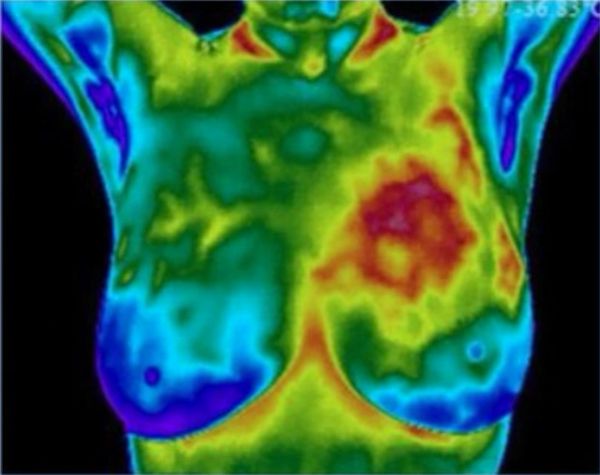
The process begins with simple preparation steps that must be strictly followed before you arrive (preexamination instructions). You will also be asked to fill out a breast health history form. The procedure itself begins with a 15-minute temperature acclimation period. During this time, you will be disrobed from the waist up while in a special temperature-controlled imaging room. Once acclimated to the temperature of the room, you will be placed in front of an infrared camera while multiple images are taken from different angles.
Contact Me
Be Wholistic with Paula, Inc.
Mailing Address: 12717 West Sunrise Blvd., #271, Sunrise, FL 33323